
The French Broad River is a true gem in the Southern Appalachian Mountains and Asheville, NC. It is one of the oldest rivers in the world. In fact, only the Nile and New River predate the French Broad.
Source and Length
The French Broad River headwaters begin in Rosman, North Carolina, a small town about 43 miles southwest of Asheville, NC. That means the French Broad River is one of only a few rivers in the United States that flows North. The French Broad River runs 210 miles and passes through Asheville, North Carolina, then north to Tennessee where it joins the Holston River near Knoxville, and eventually joins the Mississippi River before ultimately flowing out the Gulf of Mexico.
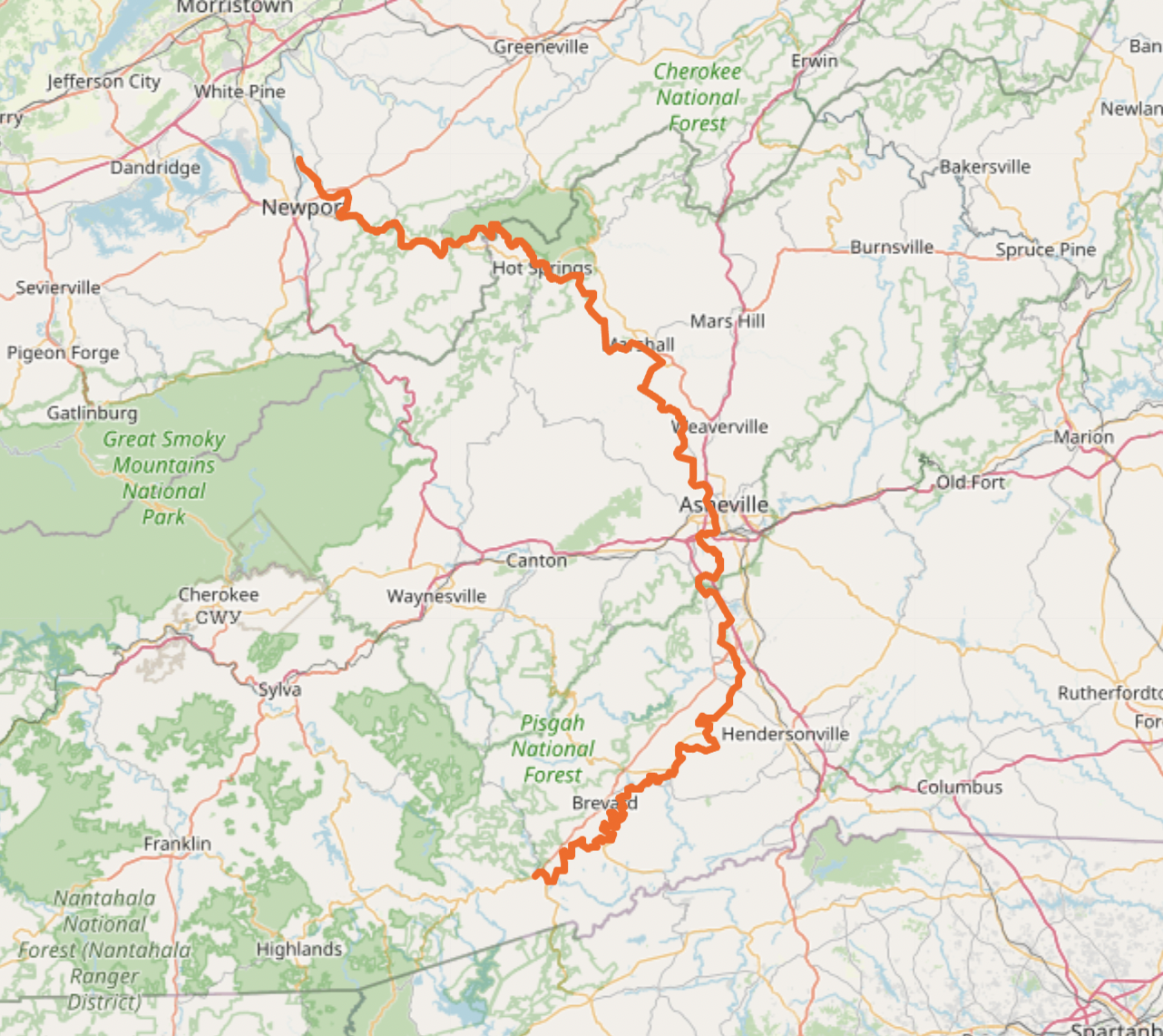
French Broad River Rafting Sections and Rapids
French Broad Adventure whitewater rafting trips take place on section 9 of the French Broad River. Our half day trip starts at the Barnard river access point, has rapids from Class I-III, and ends at the Stackhouse access point. Our full day trip also starts at Barnard, has rapids from Class I-IV, and ends in Hot Springs.
Section 9 is a scenic and exciting stretch of river that includes the most famous rapids on the French Broad River: the Maze, Big Pillow, Ledges and Frank Bell's rapids. This section also showcases the impressive rock features along the fault line that runs through the Appalachian Mountains.
Our Calm Water trips take place on calm and scenic sections of the French Broad River, such as Section 8 and Section 10.
French Broad River Flow and Water Levels
During its 213-mile journey, the free-flowing French Broad River covers calm, shallow sections and steep, narrow rapids. The water levels fluctuate during the season depending on the rainfall in the region. At higher or lower water, the river dynamics can change dramatically. Water levels tend to be the highest in the spring and lower in mid-summer.
We monitor river conditions regularly to stay informed about changes in flow. French Broad Adventures uses USGS river level data to determine time frames and trip lengths for our rafting trips.
River Preservation and Restoration
Environmental groups such as Riverlink have long championed the recovery and restoration of the French Broad River and furthered the balance of economic development backed by stewardship. Today, Riverlink along with Mountain True, Asheville Greenworks and dozens of river-based businesses including French Broad Adventures, continue to push environmental efforts to sustain our river, our region and our livelihoods.
Additional French Broad River Facts
Before new settlers arrived, this area was Cherokee territory. The French Broad River (as it is now commonly known) was integral to Cherokee livelihood and religion.The most common original Cherokee name for the French Broad River is Tah-kee-os-tee (or ᏙᎩᏯᏍᏗ in Cherokee syllabary), which translates to "racing waters". Cherokee people also historically referred to the river as Agiqua (or "Long Man"), particularly when referring to the entire river as a living entity.
The river was renamed by European settlers who were impressed by how wide it was, especially compared to many of the other small creeks and streams in the area. They also noted that the river flowed north, unlike most of the local rivers they had come across. At the time the land north (and west) of the river was French-owned land. So the derivation of the name is literal – the river is a wide, or “broad” river that flowed towards the “land of the French” – or, a French Broad river.
Those who raft the French Broad for the first time are often pleasantly surprised at how much warmer the water is in comparison to other rivers. There are a number of reasons for that. First, as mentioned above, it is a wide (and shallow) river and therefore it gets much more sun than many of the narrow rivers and creeks in the area. Second, unlike many of the other area rivers that are dam controlled, the French Broad is “free-flowing." Dam controlled rivers are fed by water that is released from a reservoir or lake, where they don’t see the light of day, so temperatures are much cooler. Lastly, the water that feeds the French Broad is mostly from rain, not snow or ice melt like some of the more northern rivers.
The French Broad River and the surrounding Blue Ridge Mountain region is one of the most biodiverse areas in the world. It is home to many species; including egrets, blue heron, hawks, eagles, tanagers, trout, small-mouth bass, catfish, crawfish, and many more.
READY TO PADDLE?
When you are ready to see the river up close and personal, book an adventure with us.
More Information on the French Broad River
Exploring the French Broad River


